HomeAbout UsServicesElectricalEmergency PowerMechanicalAir Flow ModelingFAQ Answer PageDid You KnowUseful LinksContact Us

As server sizes decrease in today's data center, the power consumed per square foot increases. This in turn requires additional heat rejection which traditional cooling cannot support. Heat rejection is essential to the proper functioning of data centers, yet poor design and maintenance choices prevent many systems from operating at peak efficiency. Many companies are installing redundant cooling systems and on-site generators to prevent costly downtime. In many companies data center managers do not have the capital to upgrade the data centers infrastructure to a more efficient design, but still need to install higher thermal density equipment. Implementing the following designs will help improve the efficiency of your  data center. While some suggestions require substantial capital cost, others are low cost that your Operation and Facility teams may implement.

- Install cabinets utilizing hot/cold aisle configuration. Strategically place CRAC units to provide supply air to 'cold' aisles and return air from 'hot' aisles.

- When heat generated by equipment installed in any given cabinet exceeds the cabinet's designed cooling capacity, install the equipment in multiple cabinets, spreading the load. This will distribute the heat load more evenly among cabinets and help alleviate hot spots within your data center. 

-  Strategically place low heat load cabinets next to cabinets with high heat loads. This enables the higher heat load cabinets to use the adjacent low heat load cabinet's unused cooling capacity.

- Install blank panels in all unused rack spaces and between cabinets that have open areas. This minimizes the intrusion of hot air mixing with the conditioned air.

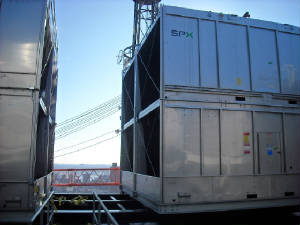
- Provide redundancy throughout the entire cooling infrastructure by maintaining at least one additional air handler unit and heat rejection unit for each designated 'zone'.

- Avoid large temperature swings, which result in thermal expansion and condensation issues.

- Consider providing the air handlers and heat rejection units with uninterrupted power supply unit, backed up with a generator to provide uninterrupted cooling to the site in the event of commercial power loss.

- Install supplemental, in row, cooling units in high heat 'zones', providing up to 30kw cooling capacity per cabinet.

- Periodic air flow modeling of raised floor environments will qualify properly sized and placed perforated tiles.  

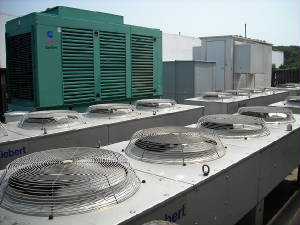
- Perform regular maintenance on your computer room air conditioner and heat rejection equipment including inspecting all filters and operating parameters.

Keep in mind all the above requires careful analysis prior to implementation. Planning and Design can provide an assessment of your data center’s cooling system. By evaluating your present and future loads, capacity and redundant capacity plans can be created and implemented to keep your data center's cooling infrastructure optimized